Skip to content

Independent referral service: calls connect you with participating Georgia HVAC contractors. How it works

Georgia HVAC Repair

Heating and cooling systems

HVAC Repair in Georgia

When the problem isn't clearly the AC or the furnace, it's an HVAC problem: airflow, ducts, controls, the blower, or the way the parts work together. What to look for and what a repair involves.

(770) 679-7684 · Referral to a participating independent HVAC contractor

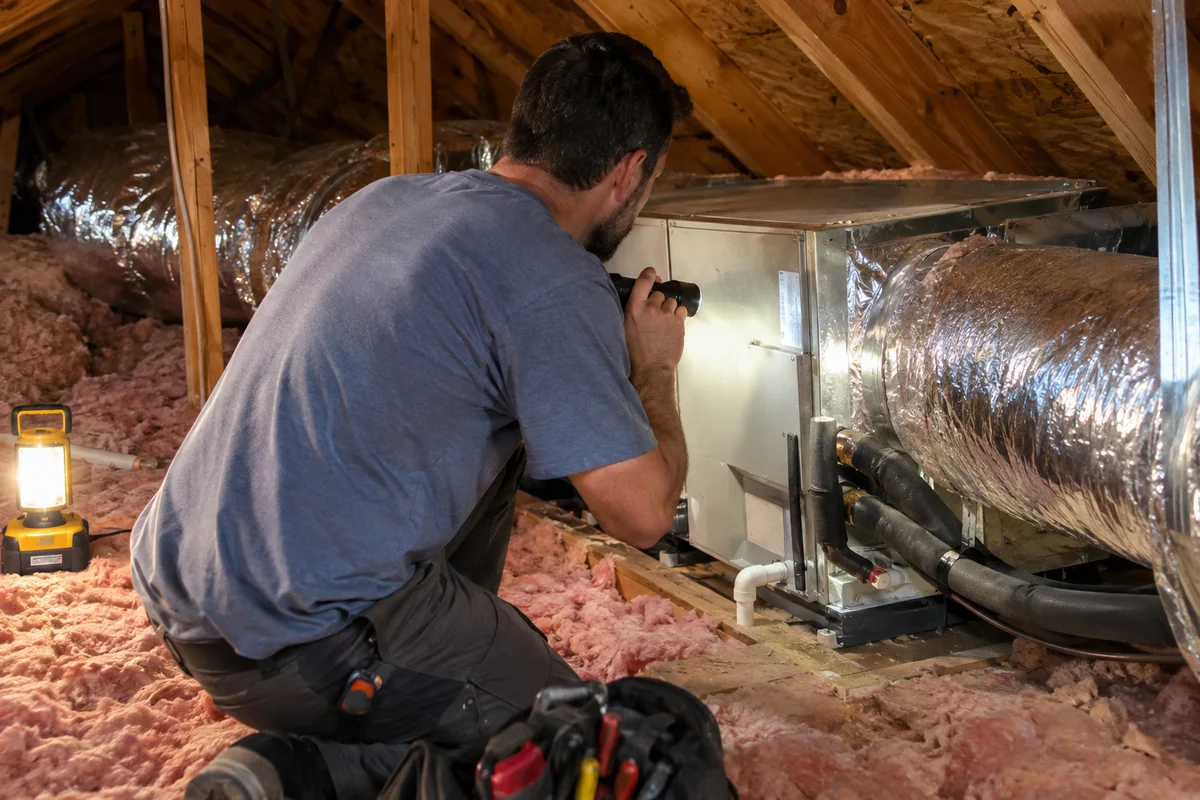
HVAC technician inspecting an indoor air handler and ductwork in a Georgia home

Last updated: 2026-10-10

Georgia HVAC Repair is an independent referral service that connects Georgia homeowners, landlords, and property managers with participating independent HVAC contractors. HVAC repair covers the whole heating and cooling system: the outdoor unit, the indoor air handler or furnace, the blower, ductwork, and controls. This page covers the system-wide problems that don't fit neatly under AC or heating alone.

Signs of a system-wide HVAC problem

  • Weak airflow from some or all vents
  • Some rooms too hot or too cold while others are fine
  • The blower runs constantly, or never stops even when heating or cooling is off
  • Dust, musty odors, or high humidity even when the system runs
  • The system won't respond to the thermostat
  • Short cycling in both heating and cooling seasons
  • Noises from the indoor unit or ductwork

Common causes

  • Blower motor or capacitor failure in the air handler or furnace, which moves air for both heating and cooling.
  • Duct problems: disconnected, crushed, or leaky ducts, often in attics and crawl spaces, send conditioned air where it isn't needed.
  • Thermostat and control issues: wiring, a failing thermostat, or a control board fault.
  • Dirty filters and coils that restrict airflow through the whole system.
  • Sizing and zoning problems in homes with additions or two stories.
  • Drainage problems that trip safety switches and shut the whole system down.

What a technician checks

A good HVAC diagnosis looks at the system as a whole: thermostat and wiring, blower operation, static pressure and airflow, filter and coil condition, refrigerant pressures on the cooling side, burner or heat-strip operation on the heating side, and the condensate drain. Duct problems may need a closer look in the attic or crawl space.

When replacement may make sense

ENERGY STAR suggests considering replacement if a heat pump or air conditioner is more than 10 years old or needs frequent repairs (ENERGY STAR). Duct problems, though, are often fixable without replacing equipment, and new equipment on bad ducts won't fix comfort complaints. Our repair or replace calculator lays out the factors.

When to call an HVAC professional

  • Weak airflow with a clean filter
  • Rooms that never reach the thermostat setting
  • The blower won't stop or won't start
  • Burning, electrical, or gas smells
  • The system ignores the thermostat after you've checked batteries and the breaker
  • Water around the indoor unit

What HVAC repair costs

Costs depend on the component. HomeAdvisor's 2026 data puts typical AC repairs at $172–$664 (HomeAdvisor, 2026), heat pump repairs at $161–$661 (HomeAdvisor, 2026), and furnace repairs at $133–$505 (HomeAdvisor, 2026). A blower motor can run $150–$2,000 and ductwork repairs $200–$2,000. Diagnostic fees commonly run $75 to $200.

  • Which component failed
  • Access: attic, crawl space, or closet
  • Whether ductwork needs repair or sealing
  • After-hours service
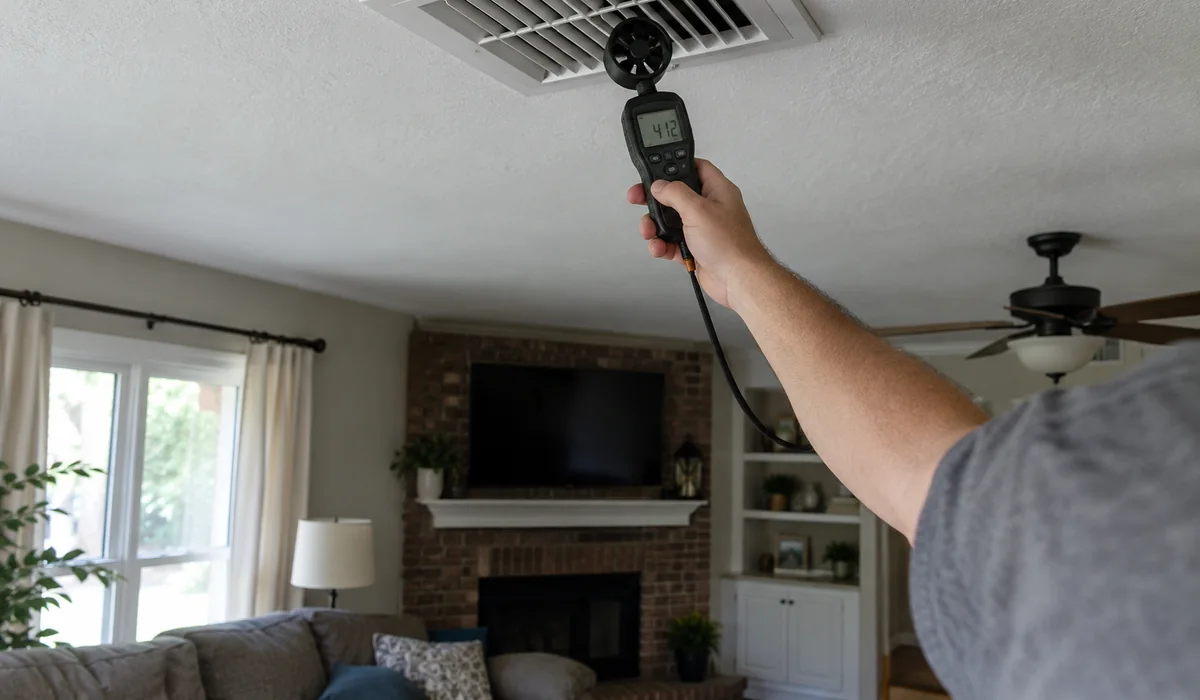
Technician checking airflow at a ceiling supply vent with a handheld meter

Safe checks before you call

  1. Filter: replace it if it's dirty.
  2. Vents: open closed supply vents and make sure furniture isn't blocking returns.
  3. Thermostat: check the mode, setting, and batteries.
  4. Breakers: check the furnace or air handler and outdoor unit breakers. Reset once only.
  5. Gas smell: leave the house and call your gas utility or 911 from outside.

Questions to ask the contractor

  • Do you hold a current Georgia conditioned air contractor license?
  • What's the diagnostic fee, and is it credited toward the repair?
  • Will you give me the diagnosis and price in writing before you start?
  • Is this an equipment problem or a duct problem?
  • Can you measure airflow or static pressure?
  • What warranty covers the parts and labor?

Related HVAC guides

Straight comparison

What you can safely check vs. what needs a technician

SymptomSafe to check yourselfCall an HVAC technician
AC won't turn onThermostat set to cool and below room temperature, batteries, breaker, the outdoor disconnect switchBreaker trips again, humming outdoor unit with a stopped fan, burning smell
Blowing warm airThermostat setting, a clogged filter, the outdoor unit blocked by debrisOutdoor fan or compressor not running, ice on the lines, warm air with a clean filter
Weak airflowReplace the filter, open closed supply ventsFrozen coil, failing blower motor, disconnected ductwork
Water around the indoor unitTurn the system off, check the condensate drain pan and float switchClogged condensate line, cracked pan, frozen evaporator coil
Ice on the lines or coilTurn cooling off and run the fan to thaw it; change the filterLow refrigerant (a leak), airflow or blower problems
Refrigerant, electrical, or gas workNot DIYRefrigerant handling requires EPA Section 608 certification; electrical and gas repairs need a licensed contractor

What to expect

What happens during an HVAC service call

  1. Questions and a quick check

    The technician asks what you have noticed (warm air, noises, ice, water, short cycling) and checks the thermostat, breaker, and filter before opening the equipment.

  2. Diagnosis

    Electrical tests on the capacitor, contactor, and motors, a look at the coils and drain, and refrigerant pressure readings where needed. Diagnostic or service-call fees commonly run $75 to $200.

  3. Price before the repair

    You should get the diagnosis and a price before work starts, and for an older system, an honest note on whether repair or replacement makes more sense.

  4. Repair

    Common parts like capacitors and contactors are often replaced the same visit. Refrigerant leak repair, compressors, and coils may need parts ordered or a return trip.

  5. Test and paperwork

    The system is run and temperatures checked. You get an invoice listing parts, labor, any refrigerant added, and warranty terms.

How the referral works

How our HVAC contractor-matching service works

  1. You call the number on this site

    Have the property's address or ZIP code ready, plus a short description: AC blowing warm air, no heat, water leaking, strange noises.

  2. Your call is routed to a participating contractor

    Your call is connected with a participating independent HVAC service provider who serves your area, if one is available. We do not send a technician ourselves.

  3. You deal with that contractor directly

    The contractor diagnoses the system, quotes the repair, and does the work under their own business name, license, and insurance. You decide whether to hire them; there is no obligation.

Good to know: availability depends on which participating contractors cover your ZIP code and how busy they are, especially during summer heat waves, and not every contractor offers every service. Ask about their Georgia conditioned air license, insurance, written price, and timeline before work starts. Our HVAC guides cover what to ask.

Request Heating or Cooling Assistance

Call and we will try to connect you with a participating independent HVAC contractor who serves your area.

Questions

HVAC Repair questions

What's the difference between HVAC repair and AC repair?

AC repair focuses on the cooling equipment: the outdoor unit, refrigerant, and evaporator coil. HVAC repair covers the whole system, including heating, the blower, ductwork, and controls. Many problems, like weak airflow, affect both heating and cooling.

Why are some rooms hotter than others?

Common causes are duct leaks or disconnections, closed or blocked vents, an undersized system, poor insulation, or a second floor served by one system. A technician can check airflow at the vents and inspect the ducts.

How much does HVAC repair cost in Georgia?

It depends on the part. HomeAdvisor's 2026 data puts most AC repairs at $172–$664, heat pump repairs at $161–$661, and furnace repairs at $133–$505, plus a diagnostic fee of $75–$200.

Does Georgia HVAC Repair do the work?

No. Georgia HVAC Repair is an independent referral service. Your call is connected with a participating independent HVAC contractor who serves your area, if one is available, and that contractor does the work.

Call (770) 679-7684 · Get Help